
Evidence-Based Personal Training in 1050 Vienna
Training built on reproducible principles, guided by current research consensus.
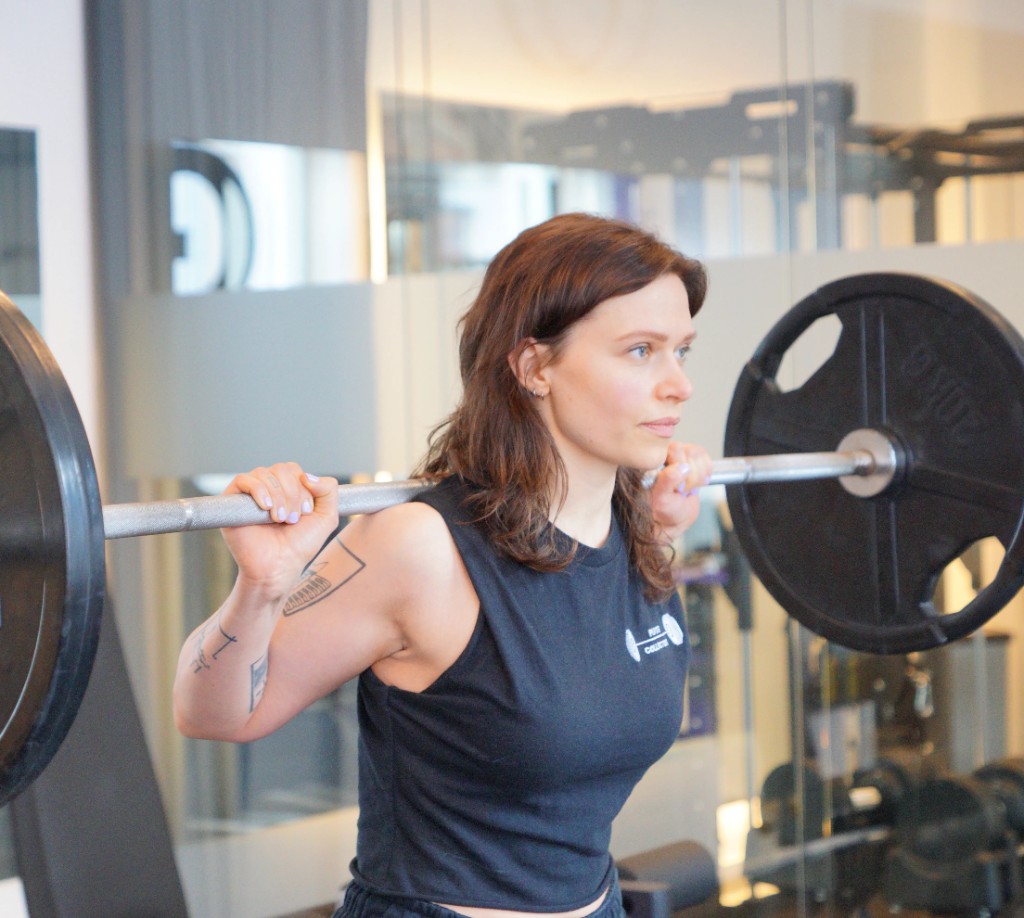
Definition
What "evidence-based" means at The Strength Lab
Evidence-based training means that programming, exercise selection, and progression follow reproducible principles. Progressive overload, controlled volume management, regular measurement of progress.
The research on strength training has grown enormously. We now know fairly precisely what effective programs look like and how to adapt them to different goals, life stages, and starting points. The problem is that much of this gets distorted or oversimplified in fitness content. I spend a significant part of my work reading, contextualizing, and translating current research into practice.
My clients get training built on what the science actually agrees on.
That includes regular assessments: strength levels, posture, mobility. Data instead of guesswork.
In practice
What the training looks like
Intro call & assessment
We start with a thorough analysis: mobility, strength, posture, training history, goals.
Programming
Periodization, volume management, and progression are tailored to your capacity, schedule, and goals.
Progress tracking
We track your progress during sessions or via a training app that I provide for free.
Adapted to your profile
The program evolves with you. Your preferences and anatomical specifics are taken into account.
Focus areas
Three areas of focus
Every person brings their own starting point, their own goals, and their own physical profile. Training is adapted accordingly. Three profiles come up particularly often in my practice. For each of them, current research gives clear guidance on what effective training looks like.
Posture & strength for desk professionals
Long hours of sitting lead to tight hip flexors, weakened back muscles, and chronic tension in the neck and shoulders. Strength training can address not just the symptoms but the root cause: insufficient load capacity and limited mobility.
Research consistently shows that targeted strength training can reduce back pain and improve postural issues, often more effectively than passive interventions.
Muscle retention on GLP-1 therapy
GLP-1 medications are effective for weight loss, but 25-40% of the weight lost can be muscle mass. Strength training is the most important countermeasure to preserve muscle, metabolism, and everyday strength during the weight loss phase.
Current research (Schoenfeld, Phillips) shows that combined with adequate protein intake, strength training can significantly reduce or even reverse muscle loss on GLP-1.
Twelve Vienna-based doctors (endocrinologists, internists, and GPs) currently refer their patients to me.
Strength training through menopause
During peri- and postmenopause, estrogen levels drop. This affects bone density, muscle mass, metabolism, and overall wellbeing. Strength training is one of the most effective measures against these changes.
The evidence is clear: targeted strength training can preserve bone density, prevent sarcopenia, and improve sleep, mood, and metabolic health. The training plan respects where your body is right now and progresses at a pace that works.
Qualifications
Qualifications & continuing education
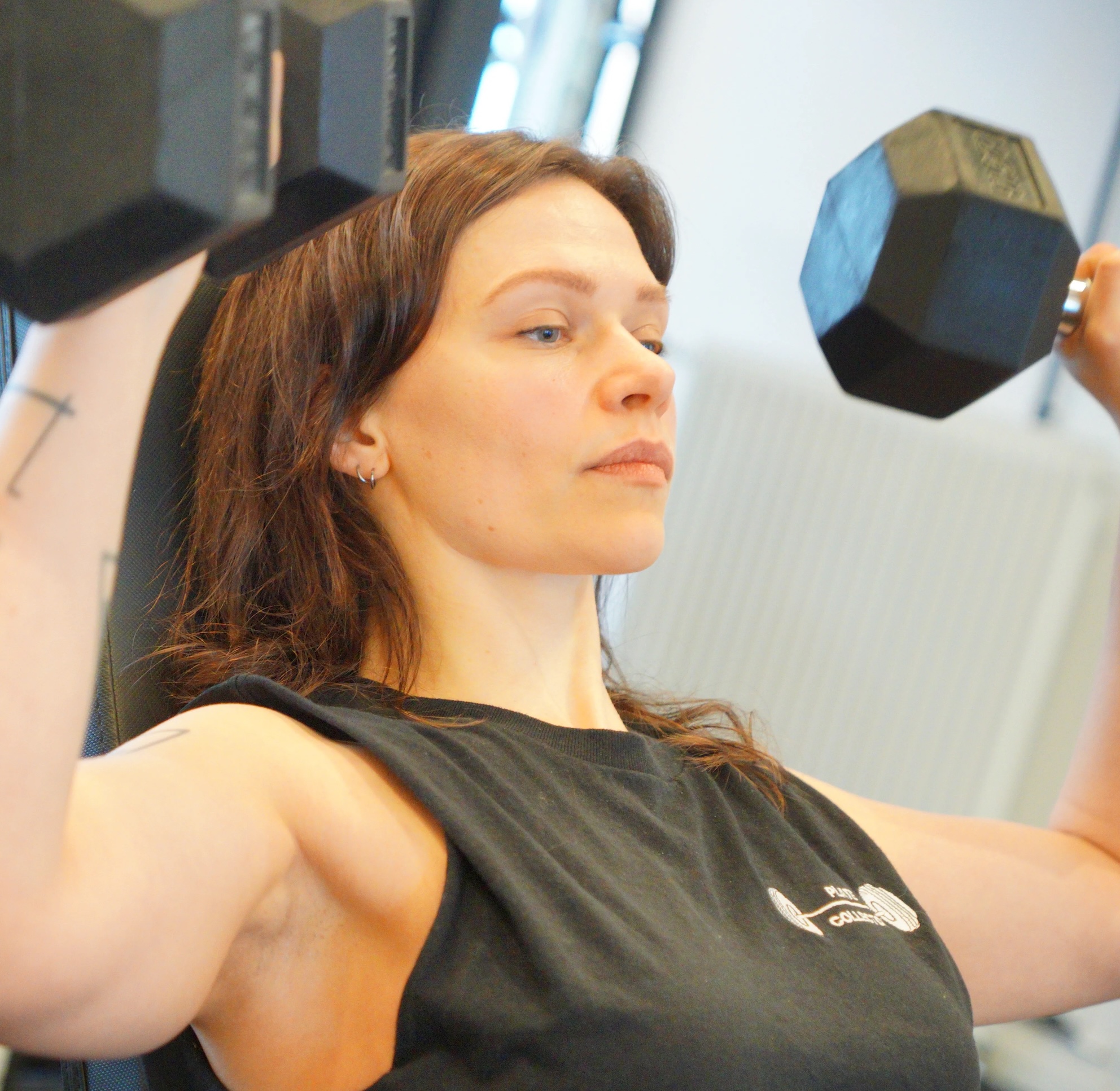
Certifications
Certified Personal Trainer
Akademie für Sport und Gesundheit
Fitnesstrainerin B-Lizenz
ZFU-accredited
Trade license
"Training concepts for health-conscious individuals" (GISA 38700477)
Sources & continuing education
My work draws on researchers whose work shapes the current consensus in exercise science, including:
- •
Brad Schoenfeld — hypertrophy, training volume
- •
Stuart Phillips — protein, muscle retention
- •
Greg Nuckols — strength, periodization
- •
Peer-Reviewed Journals — JSCR, Sports Medicine, BJSM
Ongoing education through current publications, conferences, and exchange with colleagues and doctors.
Context
What "evidence-based" does not mean
Evidence-based does not mean chasing every new study.
A single paper rarely changes the consensus. Programming is built on robust principles, not headlines.
It does not mean there's no individual adaptation. Quite the opposite.
Evidence provides the framework. Within that framework, every program is tailored to the person: capacity, goals, schedule, history.
It does not mean "academic." Training should work and be enjoyable.
The evidence stays in the background. You don't need to read papers to benefit from a good program. You just need to show up.
It does not mean that personal experience doesn't matter.
Research provides the foundation. But the daily work with clients (what works in practice, what motivates, what is sustainable) complements the evidence. Both together are stronger than either alone.
FAQ
Questions about the evidence-based approach
Book an intro call
15 minutes, free and no commitment. We'll talk about your goals and whether evidence-based training at The Strength Lab is right for you.
Free intro call