Strength Training and a Longer Life: A 30-Year Study of 147,000 People
June 12, 2026
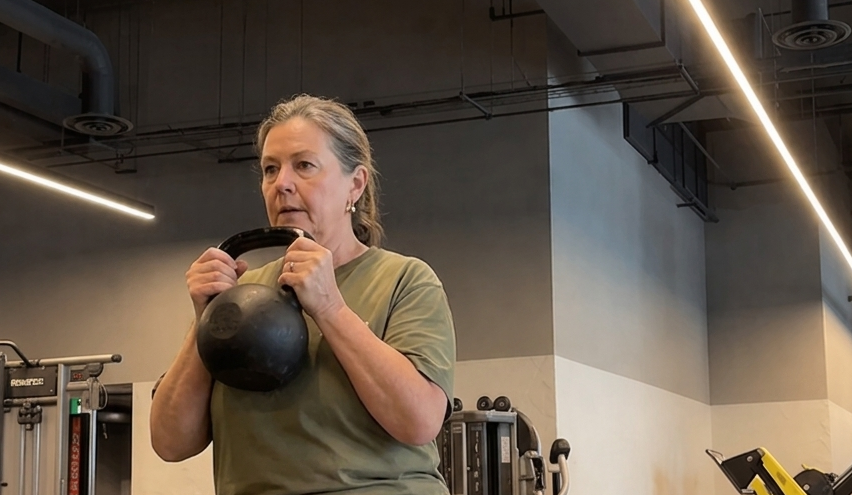
A doctor once put it in deliberately extreme terms: cardio is for the duration of your life, strength training is for the quality of it. It is an exaggeration, but that's the point.
In June 2026 the British Journal of Sports Medicine published one of the largest studies ever done on resistance training and death, led by researchers at the Harvard T.H. Chan School of Public Health. The numbers are worth sitting with before anyone talks about what they mean.
147,374 people. Three cohorts: the Health Professionals Follow-up Study and the two Nurses' Health Studies. Up to 30 years of follow-up. 35,798 deaths recorded and classified by physicians who did not know how any participant had trained.
Why the size matters more than usual
Large sample sizes get thrown around a lot, but there's more that sets this study apart from others. Most research on exercise and mortality asks people about their training once, at the start, then follows them for years. One snapshot, decades of inference built on top of it.
This study asked every two years, for up to three decades. That repeated measurement captures how someone trains habitually, across the long stretches of a life, and it strips out a lot of the noise that makes single-snapshot studies wobble. When the teams running the most respected cohorts in epidemiology point their best long-term data at resistance training specifically, the result carries weight.
What they found
People doing 90 to 119 minutes of resistance training per week had:
- 13% lower risk of dying from any cause
- 19% lower risk of dying from cardiovascular disease
- 27% lower risk of dying from neurological disease
These held after the researchers adjusted for aerobic activity. So the effect belongs to the resistance training itself, on top of whatever else a person did for their cardiovascular system.
That third number is the surprising one. A 27% lower risk of death from neurological disease, the category we least associate with a barbell.
Training volume depends on your goal
For the health and longevity outcomes above, the benefit plateaued at around 120 minutes a week. Past that point, more training did not lower the risk of death any further. For cancer mortality the protective signal showed up only at the lower doses, 1 to 59 minutes a week, and faded at higher volumes. Two to three sessions a week is where most of this protection lives.
That is a genuinely encouraging finding, and it is also easy to misread. The plateau applies to dying, not to building. If the goal is maximising muscle mass and strength, the dose-response keeps climbing well past two hours a week. Research on muscle growth points to something closer to 10 to 20 hard sets per muscle group per week for most people who want to get visibly bigger and measurably stronger. The mortality plateau is not a ceiling on useful training. It is the point past which extra volume stops buying additional protection from death, while still buying muscle and strength.
So the two goals sit on different curves. A modest, sustainable dose covers the health case made in this study. Optimising your physique and your numbers is a separate project with a higher price of admission.
The strongest results of all came from pairing resistance training with aerobic activity, the two together outperforming either alone. But strength work on its own still lowered mortality, even for people doing very little cardio. Starting with one is far better than waiting to do both.
The takeaway
A study of nearly 150,000 people across 30 years clearly shows: A strong body is not a vanity project bolted onto a healthy life. It is part of the machinery that keeps the rest of you running, the heart and the brain included. Two or three sessions a week is the entry price. What you build on top of that is up to you.
Zhang Y, et al. Long-term resistance training with all-cause and cause-specific mortality. Br J Sports Med 2026;60:874–883.
If you want to start training and are looking for help getting started, learn more about how I work or book a free intro call.