Why Every Woman Should Be Strength Training (Especially Around Menopause)
February 16, 2026
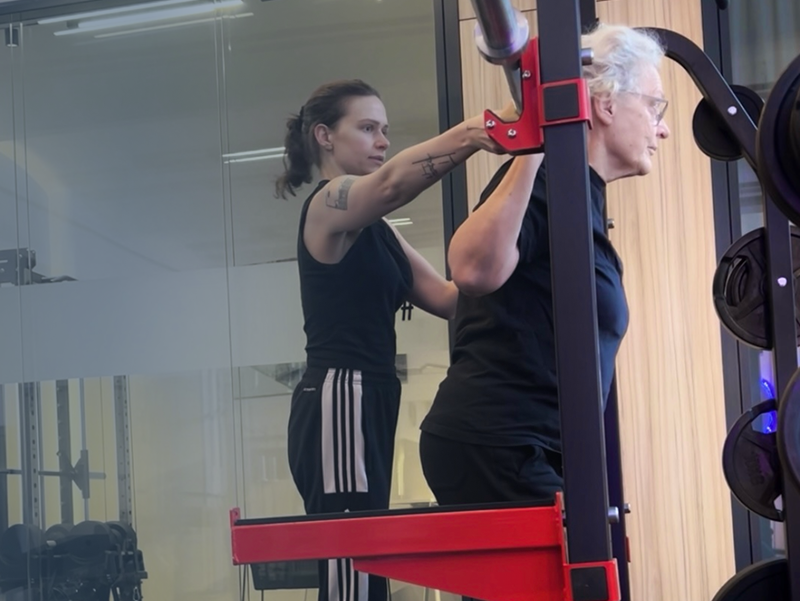
A lot of women come to the gym asking to "tone up" or "get fit". Fair. But what they're usually describing is a very specific outcome: more muscle, more shape, more energy, and a body that feels reliable. The fastest path there is not endless cardio. It's progressive strength training.
So let me be direct: strength training is one of the most important things you can do for your health. And if you're approaching menopause, or already in it, it stops being important and starts being essential.
The Basics, Briefly
Women naturally carry less muscle mass than men and (just as men) begin losing it from around their 30s, a process called sarcopenia. Without intervention, this decline accelerates. Bone density follows a similar trajectory. Metabolic rate drops. The compounding effect of these changes over decades is significant.
Strength training directly counters all of it. Directly.
But this isn't really news. The more interesting question is what happens when menopause enters the picture.
What Menopause Actually Does
Menopause marks a major hormonal shift. The decline in oestrogen affects nearly every system in the body: bone density, muscle mass, cardiovascular health, metabolism, mood. Many women experience hot flashes, sleep disruption, weight gain (particularly around the midsection), joint stiffness, and a general decline in physical capacity.
There's a growing body of research showing that strength training can meaningfully address many of these symptoms.
A 2023 systematic review by Capel-Alcaraz et al., examining 12 studies, found that strength exercises improved leg and pelvic floor strength, physical activity levels, bone density, metabolic and hormonal markers, heart rate, blood pressure, and even hot flashes (1). That's not a marginal benefit. That's a broad, systemic improvement across nearly every symptom women report struggling with most.
Cardio Alone Won't Cut It
This is the point where I risk upsetting the running community, but the data is the data.
Khalafi et al. (2023) conducted a large-scale meta-analysis covering 129 studies and over 7,000 postmenopausal women. They found that resistance training effectively increased cardiorespiratory fitness, lower-body strength, upper-body strength, and handgrip strength, regardless of age (2).
Here's the critical detail: while both aerobic (cardio) and resistance training improved cardiovascular fitness and lower-body strength, only resistance training increased upper-body strength in women (2).
Upper-body strength matters more than most people realise. It's what allows you to carry shopping, lift yourself off the floor, hold a grandchild, maintain independence as you age. If your training programme doesn't include it, you're leaving a significant gap.
Don't get me wrong, cardio has its place. But on its own, it's not enough.
The Body Composition Problem
One of the most common frustrations I hear from women during and after menopause: "I'm eating and exercising the same as before, but my body is changing." This isn't imagined. It's physiological.
Isenmann et al. (2023) ran a 20-week controlled trial comparing resistance training outcomes in pre- and postmenopausal women. Pre-menopausal women saw increases in muscle mass and decreases in fat mass with moderate-intensity training twice a week. Postmenopausal women gained significant strength but didn't see the same body composition changes at that dose (4).
This doesn't mean resistance training doesn't work after menopause. It does. But the evidence suggests postmenopausal women likely need more: more than two sessions per week, more than six to eight sets per muscle group weekly, and intensities above 50% of their one-rep max to drive meaningful changes in muscle mass and fat loss (4).
This is important. It means the generic guidelines that get handed around aren't always sufficient. Postmenopausal women benefit from a more tailored, progressive approach, and that's exactly where working with someone who understands the nuance makes a difference.
So What Does a Good Programme Look Like?
A 2024 systematic review by Gonzalez-Galvez et al. gives us a useful framework. Their research confirmed the benefits of resistance training for postmenopausal women and recommends training three days per week, in 60-minute sessions, targeting improvements in quality of life, functionality, and disease prevention (3).
In practice, I'd suggest something along these lines:
- Compound movements: squats, deadlifts, rows, presses. These challenge multiple muscle groups and give you the most return for your time.
- Progressive overload: gradually increasing weight, reps, or sets over time. Your body adapts, so your training needs to evolve with it.
- Adequate recovery: sleep, nutrition, stress reduction, rest days. Training is the stimulus. Recovery is where the change actually happens.
You don't need to spend endless hours in the gym. You don't need to start with heavy weights. You need to start, be consistent, and progress over time.
The Point
The research is clear and it's consistent. Strength training improves bone density, cardiovascular health, metabolic function, body composition, and menopausal symptoms in women. It builds the kind of physical resilience that keeps you strong and independent for decades.
If you've been putting it off, or if you've been told it's not for you, I'd encourage you to reconsider. The evidence says otherwise.
And if you're unsure where to begin, that's what I'm here for. Learn more about strength training for women or book a free intro call.
References
-
Capel-Alcaraz, A.M. et al. (2023) 'The Efficacy of Strength Exercises for Reducing the Symptoms of Menopause: A Systematic Review', Journal of Clinical Medicine, 12(2), p. 548. doi: 10.3390/jcm12020548. PMID: 36675477; PMCID: PMC9864448.
-
Khalafi, M. et al. (2023) 'Influence of exercise type and duration on cardiorespiratory fitness and muscular strength in post-menopausal women: a systematic review and meta-analysis', Frontiers in Cardiovascular Medicine. doi: 10.3389/fcvm.2023.1190187.
-
Gonzalez-Galvez, N. et al. (2024) 'Resistance training effects on healthy postmenopausal women: a systematic review with meta-analysis', Climacteric, 27(3), pp. 296-304. doi: 10.1080/13697137.2024.2310521. PMID: 38353251.
-
Isenmann, E. et al. (2023) 'Resistance training alters body composition in middle-aged women depending on menopause: A 20-week control trial', BMC Women's Health, 23(1), p. 526. doi: 10.1186/s12905-023-02671-y. PMID: 37803287; PMCID: PMC10559623.